

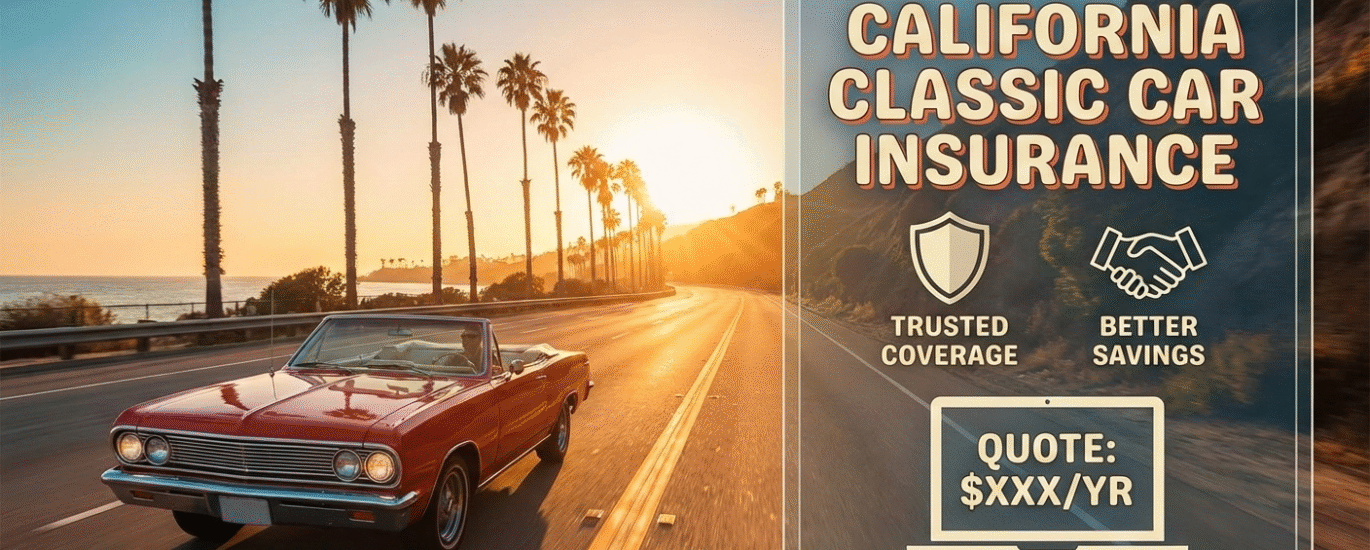
Classic cars in California are everywhere if you know where to look. Parked in quiet garages, brought out on weekends, driven carefully to shows, or sometimes just taken out for a slow drive along the coast. For most owners, these cars are not about speed or convenience. They are about time, patience, and pride. Because of that, insuring them the right way matters more than many people realize.
When people search for California classic car insurance quotes, it’s usually because something clicked. Maybe they restored a car. Maybe the value went up. Or maybe they realized their regular auto policy doesn’t really make sense anymore. That realization happens more often than you’d think.
What Makes a Car “Classic” in California
Insurance companies don’t treat every old car the same way. Age matters, but it isn’t the only factor. Insurers also consider the car’s condition, how owners use it, and how they store it.
Most insurers look at vehicles that are at least 20 or 25 years old. Some will go younger if the car is collectible or rare. What really matters is how often the car gets driven. Owners usually take a classic car out only on occasion and avoid using it for work or daily errands.
In California, that works in an owner’s favor. Limited use lowers risk. Lower risk often means better pricing. That’s one of the reasons classic car insurance exists in the first place.
Why Regular Auto Insurance Often Falls Short
This is where many owners get caught off guard. A standard auto policy looks at market value. Over time, market value goes down. Classic cars don’t work that way.
Restoration adds value. Rarity adds value. Demand adds value. But regular insurance does not always care about that. If something happens, the payout may be far less than what the car is actually worth.
That’s why classic car insurance uses agreed value. The value is discussed and set upfront. If there is a total loss, that is the amount paid. No depreciation. No arguing later.
For most owners, that alone makes switching worth it.
How Insurers Determine California Classic Car Insurance Quotes
Quotes aren’t random. Insurers look at a few specific things.
The car itself is reviewed first. Year, make, model, condition, and any modifications. Storage is next. A locked garage almost always helps. Mileage limits are common. The less the car is driven, the better the rate tends to be.
Your driving record still matters, but it’s usually not weighted as heavily as with daily-use cars. Location also plays a role. California traffic, weather patterns, and theft statistics are all factored in.
Even with all that, many people are surprised to see that classic car insurance costs less than their regular auto policy.
Agreed Value Coverage and Why Owners Care About It
Agreed value coverage is not just a feature. It’s the backbone of classic car insurance.
Before the policy starts, the owner and insurer agree on what the car is worth. That value is based on documentation, photos, appraisals, and sometimes restoration receipts. Once agreed, it’s locked in.
If the car is totaled, that amount is paid. No depreciation. No guessing.
For someone who has put years into a car, this matters a lot.
Finding the Right Providers in California
There are insurers that specialize in classic and collector vehicles. Some only insure classics. Others offer it as part of a larger product lineup.
The challenge is not availability. It’s comparison.
Rates, coverage rules, and restrictions vary. Some providers are strict about mileage. Others are more flexible. Some are better with modified vehicles. Others prefer original restorations.
This is where comparing California classic car insurance quotes actually saves money. It’s also where working with an independent agency helps.
At Number 1 Insurance, access to multiple carriers allows options to be reviewed side by side. That usually leads to better decisions and fewer surprises later.
Where Real Savings Usually Come From
Savings don’t usually come from cutting coverage. They come from how the policy is structured.
Limited mileage discounts are common. Secure storage matters. Clean driving history helps. Some insurers offer discounts for car club memberships or collector associations.
Bundling also helps. When classic car insurance is combined with home, umbrella, or other policies, pricing often improves.
Many owners never see these savings because they never ask or compare.
Usage Rules and Why They Exist
Classic car insurance is not designed for daily driving. That’s not a flaw. That’s the reason it’s affordable.
Most policies allow pleasure driving, shows, events, and parades. They usually exclude daily commuting to work. These rules help keep risk low and premiums reasonable.
Most owners don’t find these limits restrictive. They match how the car is already being used.
What Claims Look Like With Classic Cars
Classic car insurers handle claims differently than standard auto claims. They involve adjusters who understand classic vehicles and work with repair shops that specialize in restoration.
This matters. Classic cars are not fixed the same way modern cars are. Parts may be rare. Labor requires experience.
The right insurer understands this. The wrong one doesn’t.
Why Owners Should Review Coverage Over Time
Classic car values change. A car restored this year may be worth more next year. Market demand shifts. Rare models become more valuable.
If coverage isn’t reviewed, agreed value can fall behind reality. Annual reviews help keep things accurate.
This is something many owners forget until it’s too late.
Common Mistakes Owners Still Make
The biggest mistake is assuming regular insurance is enough. The second is undervaluing the car. Another common issue is not disclosing modifications.
Skipping reviews is another problem. Coverage that made sense five years ago may not today.
Most of these issues are avoided with the right guidance.
FAQs About California Classic Car Insurance Quotes
Is classic car insurance cheaper than standard auto insurance?
Often, yes. Limited use and careful ownership usually reduce risk.
Can a classic car be driven on weekends?
Yes. Most policies allow pleasure driving and events.
Does age alone make a car classic?
No. Usage, condition, and collectibility matter too.
Final Thoughts
Classic cars deserve to be treated differently. They are not daily tools. They are investments, hobbies, and sometimes personal history.
Finding the right California classic car insurance quotes takes a bit of effort, but it pays off. With the right coverage, owners protect more than metal and paint. They protect the time and care put into something special.
For those looking for guidance without pressure, Number 1 Insurance offers support that fits real owners, not generic profiles. When insurance works the right way, it keeps the focus exactly where it belongs.
On enjoying the car.